Case study / Protective apparel

Motorcycle
Hoodie

A familiar hoodie silhouette engineered around concealed impact protection and precise technical control.

Category
Men’s motorcycle hoodie
Colorway
Black
Size scale
XS–XXL
Sample size
L
Status
Sampling complete · In user testing
Documented scope
Colour CAD · Exterior construction · Armor integration · Fit system · Bill of materials · 3D renders
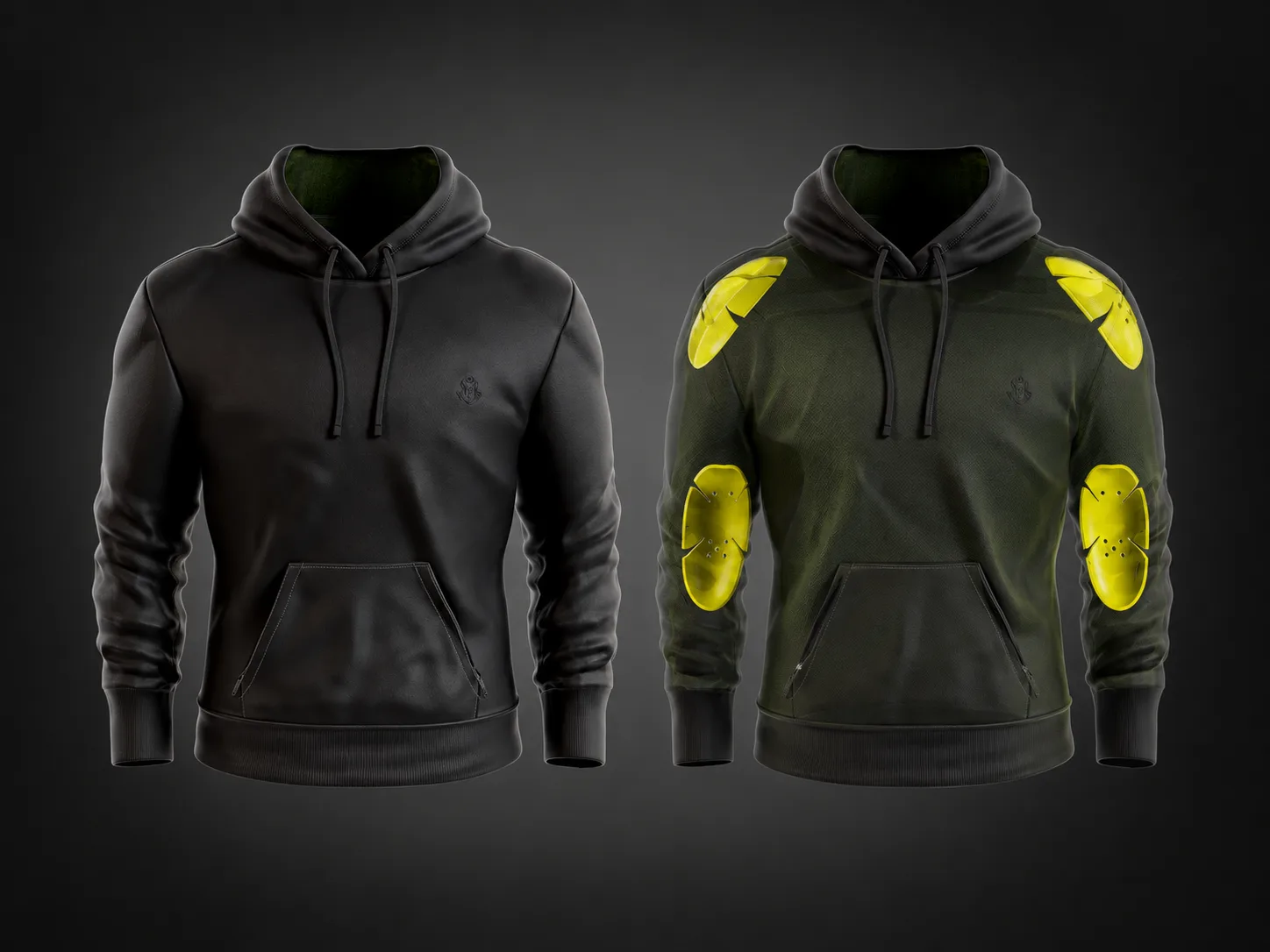
Finished black motorcycle hoodie beside a transparent view revealing its concealed shoulder and elbow armor system
Motorcycle Hoodie / Exterior + concealed protectionGaaha case study

The development journey

Protection within
a familiar form.

The project moves from an understated hoodie exterior into the concealed architecture that positions armor, controls fit and defines the factory reference.

Confidentiality note Some details in the original technical documents have been intentionally blurred to comply with NDA obligations and client approval requirements.

Stage 01 / Visual direction

Technical purpose, quiet exterior

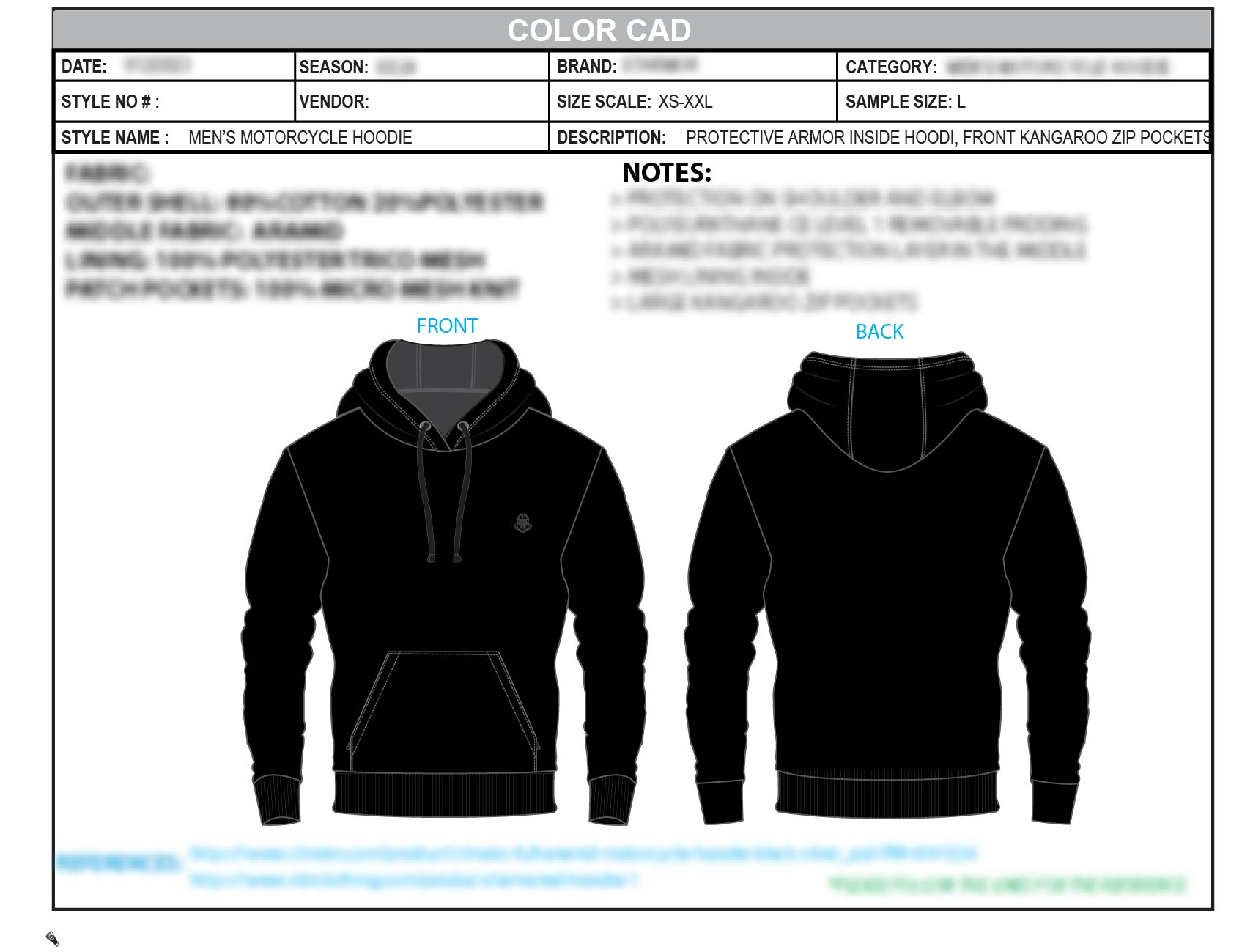
The colour CAD establishes an all-black pullover with a structured hood, restrained chest mark and front kangaroo zip pockets. Front and back views keep the initial read deliberately clean.

  • Black colorway
  • Pullover silhouette
  • Zip-entry pocket
Colour CAD showing front and back views of the black motorcycle hoodie
Colour CADTech pack / 01

Stage 02 / Exterior definition

The hoodie resolved as a garment

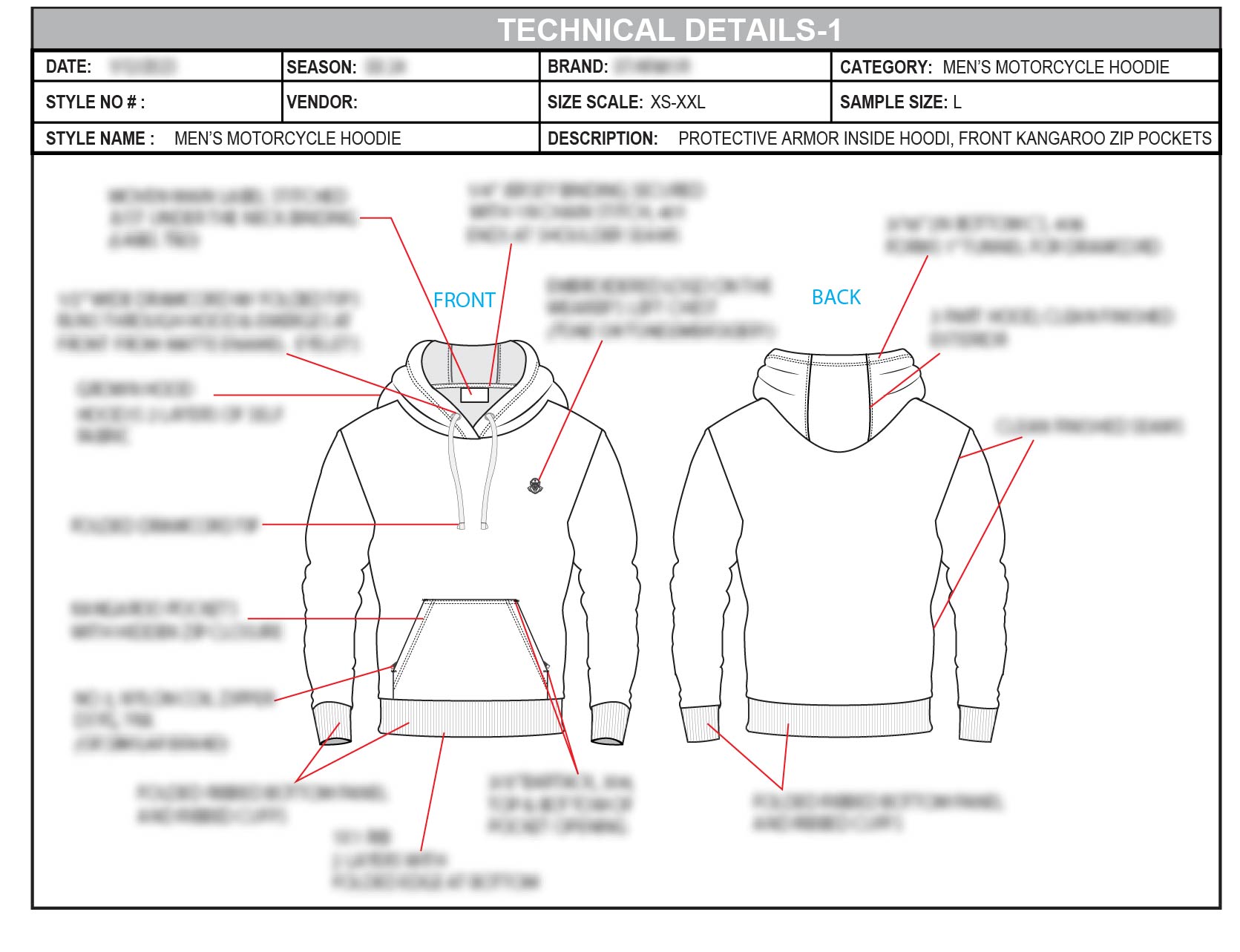
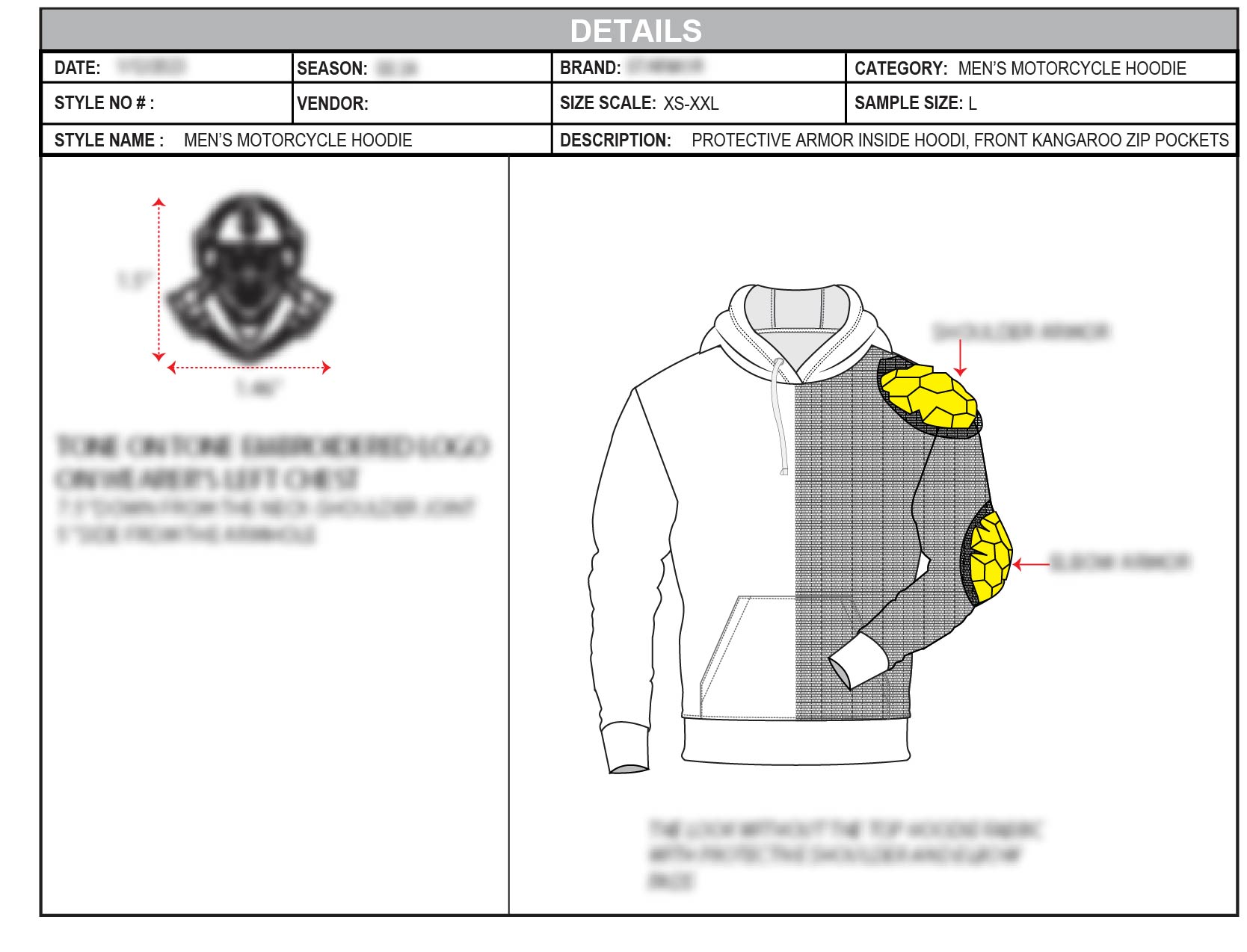
The first technical sheet defines the visible build: hood paneling, drawcords, rib finishes, pocket geometry and seam placement. A dedicated detail sheet then clarifies the relationship between the shell and protective zones.

  • Construction lines
  • Pocket geometry
  • Placement logic
Technical sheet showing exterior front and back construction of the motorcycle hoodie
Exterior constructionTech pack / 02
Detail sheet showing protective insert placement at shoulder and elbow
Protective placement detailTech pack / 04

Stage 03 / Concealed protection

The hidden layer becomes the system

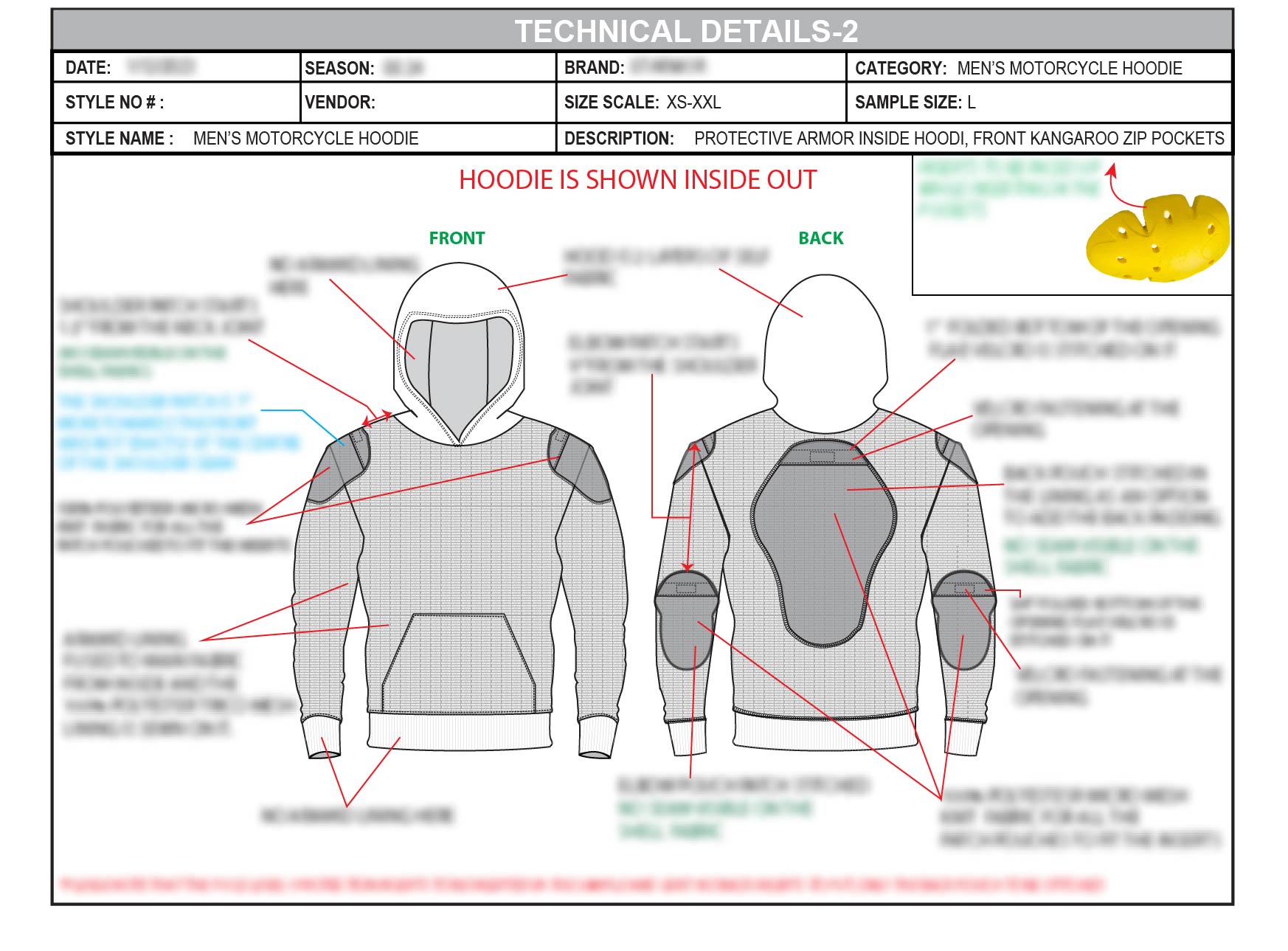
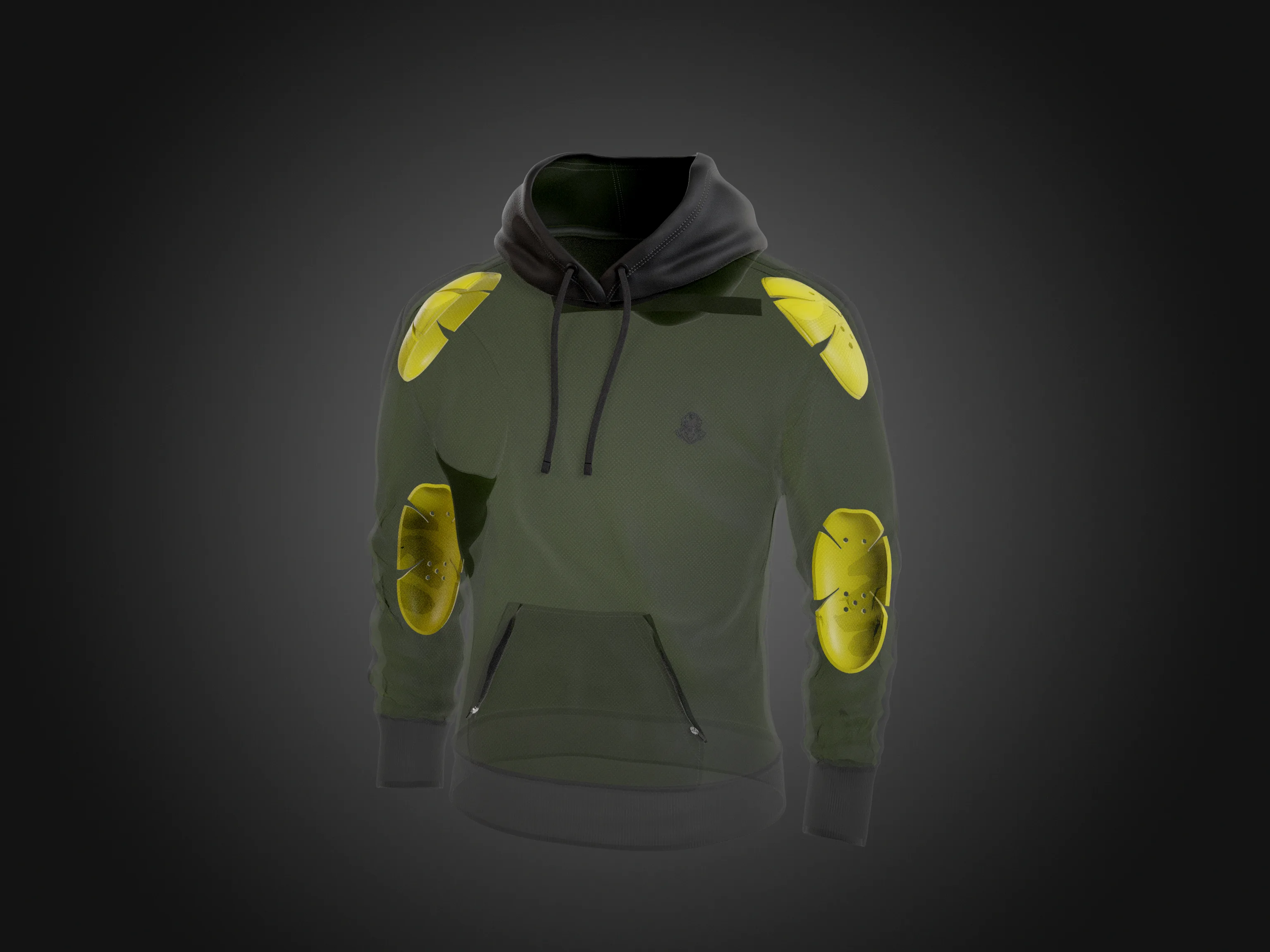
An inside-out construction view maps protective inserts across the shoulders, elbows and back. Supporting renders make that architecture legible without changing the hoodie’s understated outer appearance.

  • Shoulder inserts
  • Elbow inserts
  • Back protection
Inside-out technical sheet mapping protective inserts across the motorcycle hoodie
Internal protection mapTech pack / 03
Transparent 3D render showing shoulder and elbow armor positions inside the hoodie
Armor integration visualisationShoulder · Elbow

Stage 04 / Fit and production control

A build the factory can follow

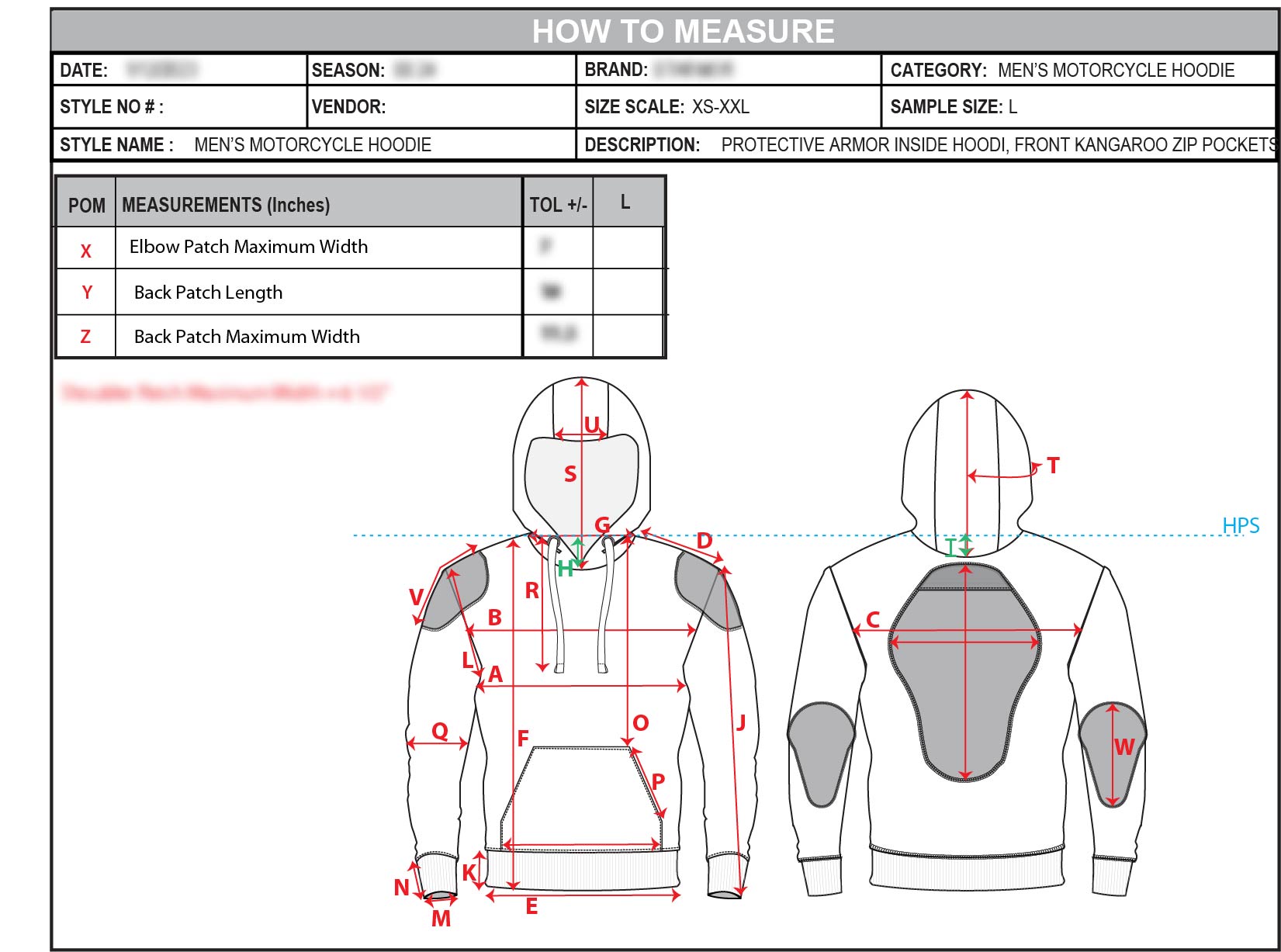
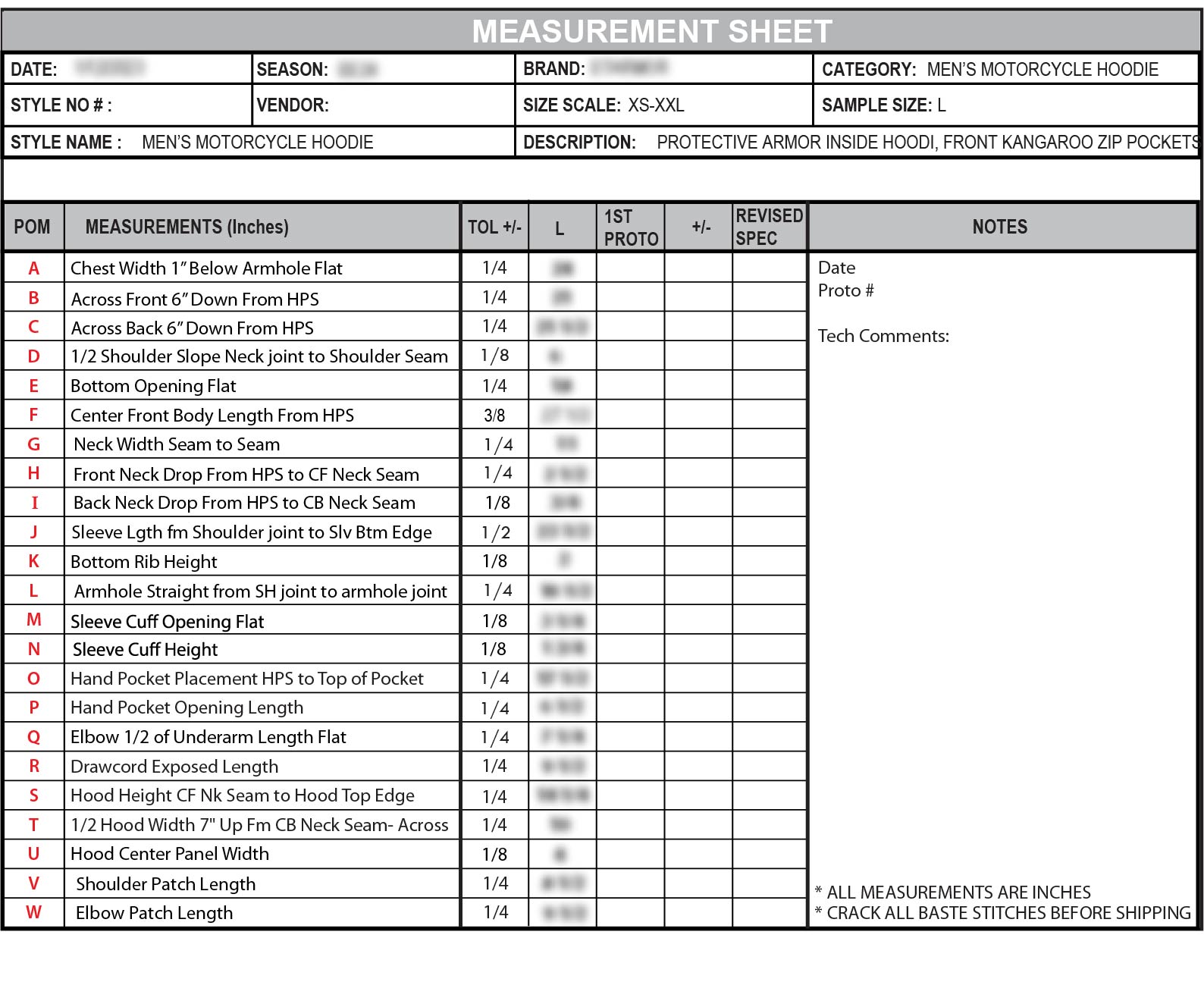
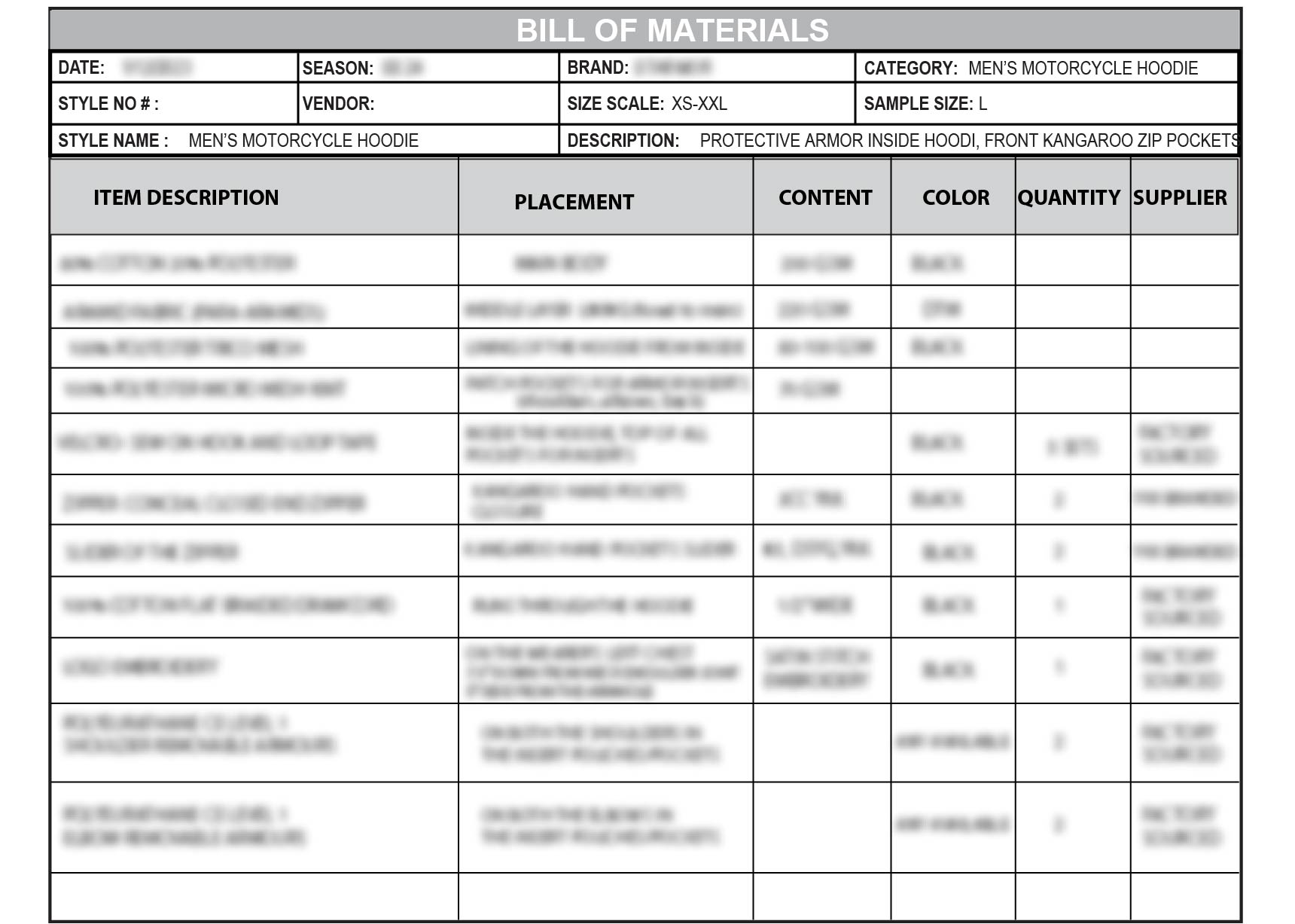
The measurement guide connects each point of measure to the garment and protective zones. The specification sheet and bill of materials carry that logic into fit review and component control.

Measurement values, material data and client details remain intentionally blurred in the original files.

How-to-measure guide for the motorcycle hoodie and protective patch areas
How to measureTech pack / 06
NDA-protected measurement specification sheet for the motorcycle hoodie
Fit specificationNDA-protected / 05
NDA-protected bill of materials for the motorcycle hoodie
Bill of materialsNDA-protected / 07

Stage 05 / Visual resolution

One exterior, multiple layers

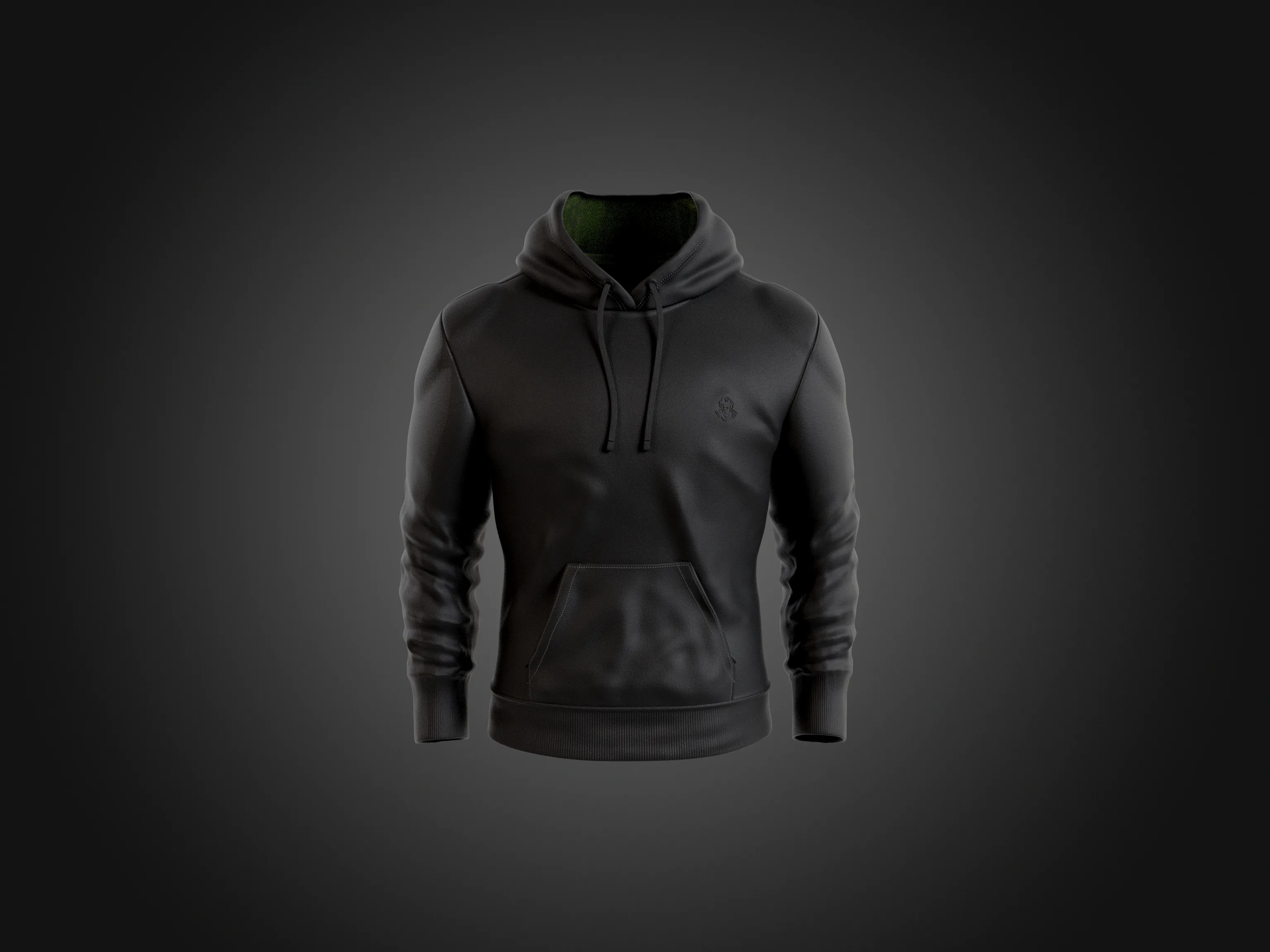
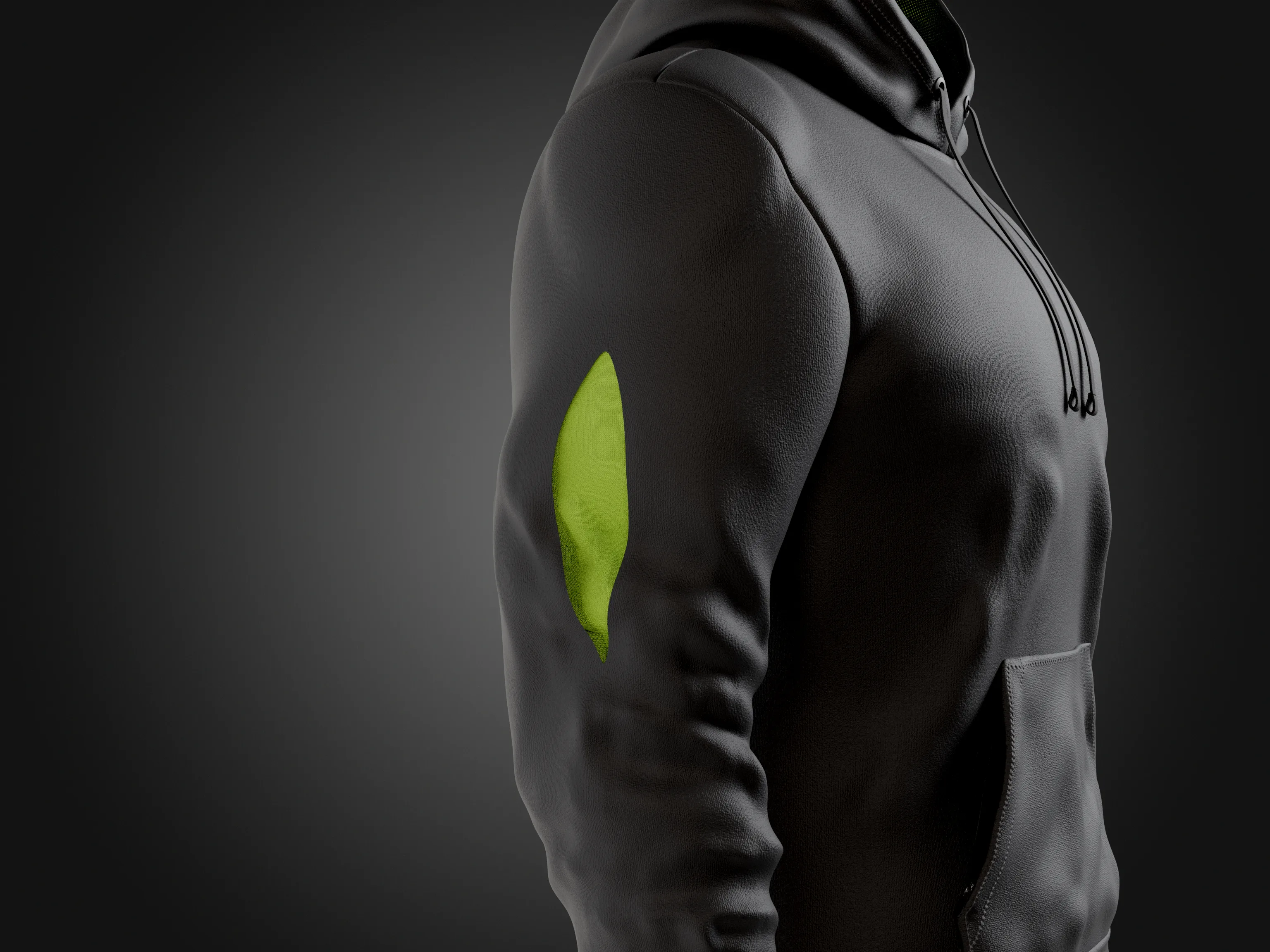
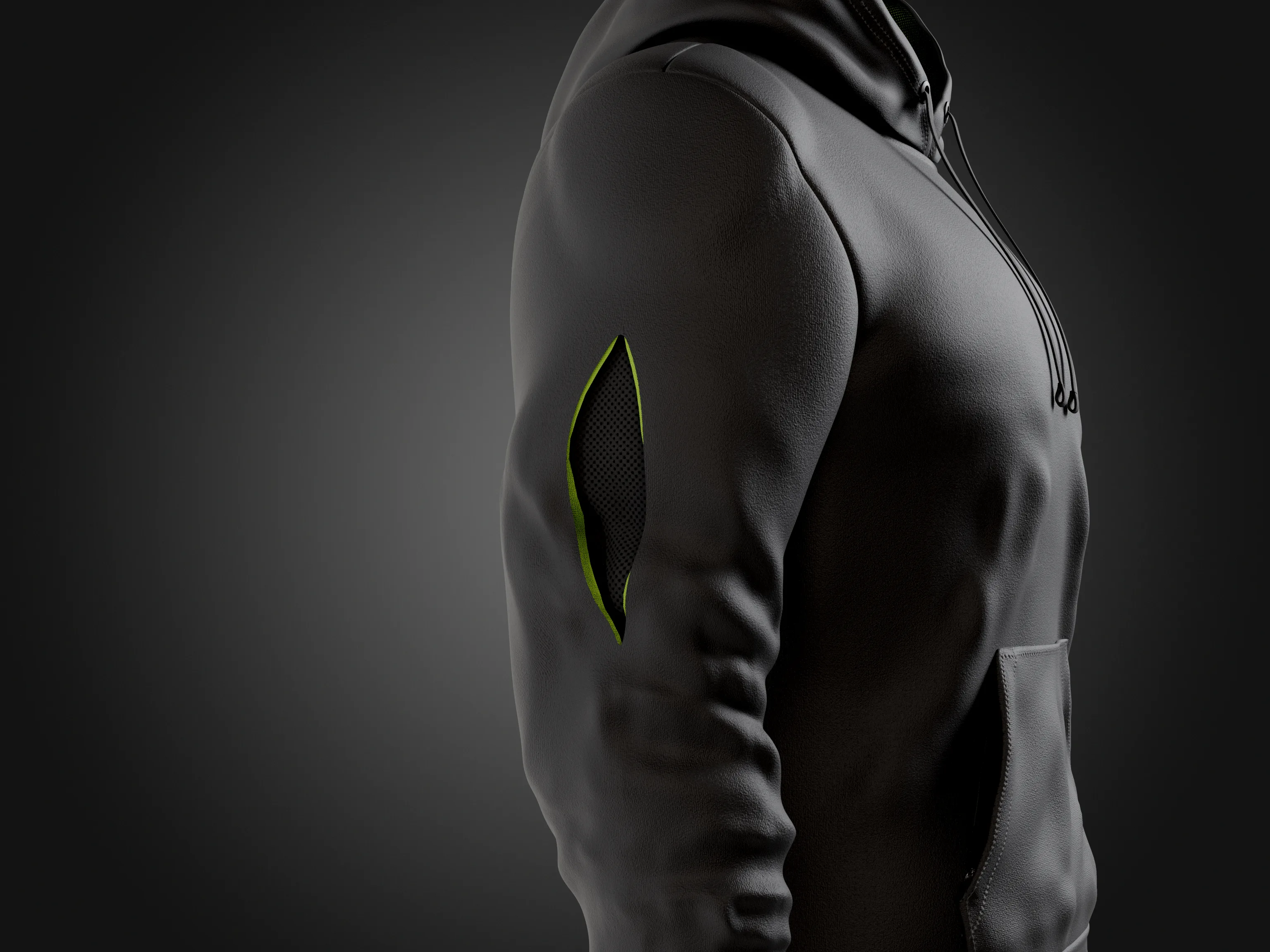
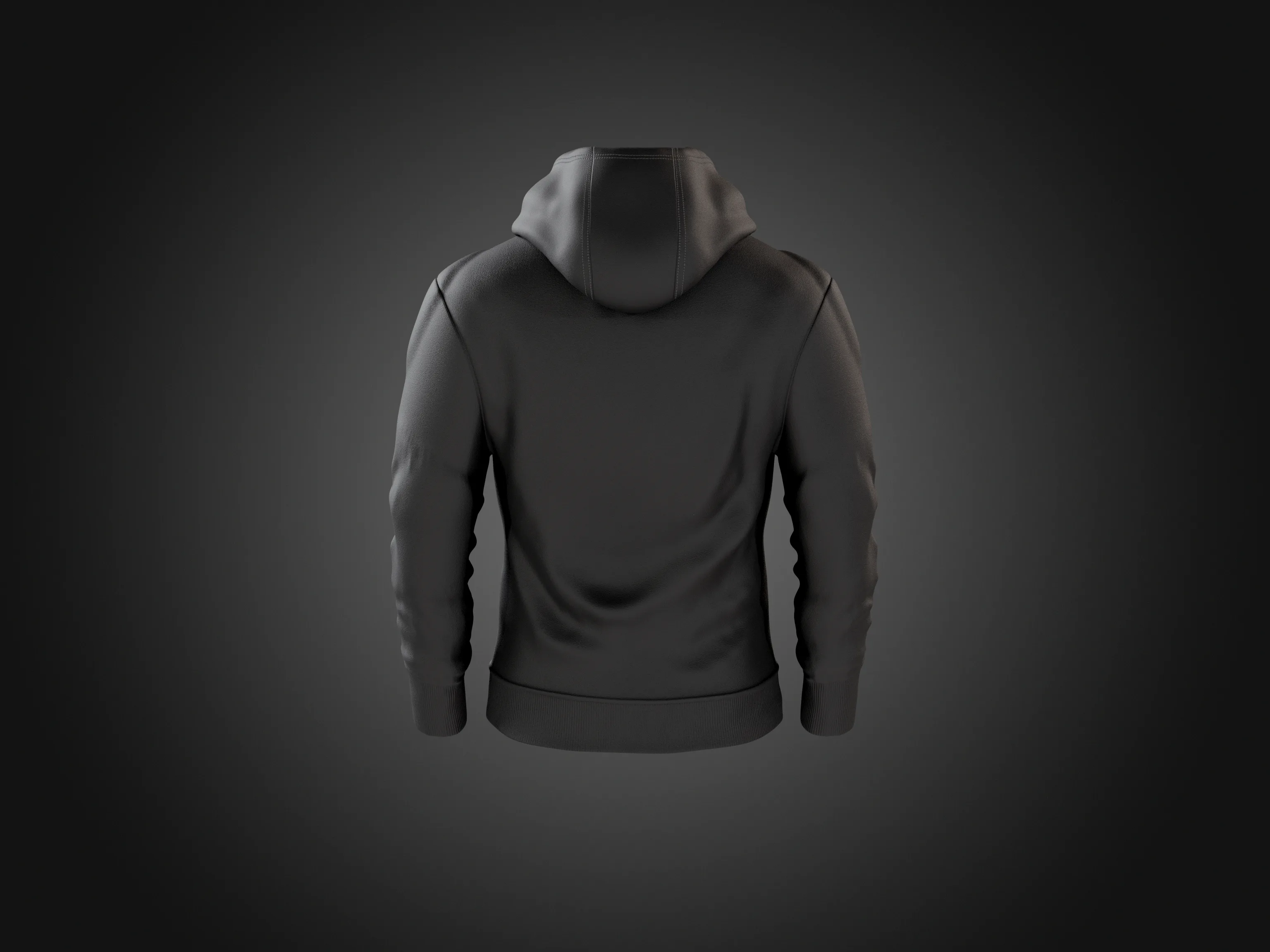
The render sequence moves between the finished silhouette and its functional details: the sleeve opening, protective insert system, back view and tonal chest identity.

Front 3D render of the finished black motorcycle hoodie
Finished front
Close 3D view of the upper sleeve detail in its closed position
Sleeve detail / Closed
Close 3D view of the upper sleeve detail in its open position
Sleeve detail / Open
Transparent 3D render revealing the shoulder and elbow armor system
Concealed armor system
Back 3D render of the finished motorcycle hoodie
Finished back
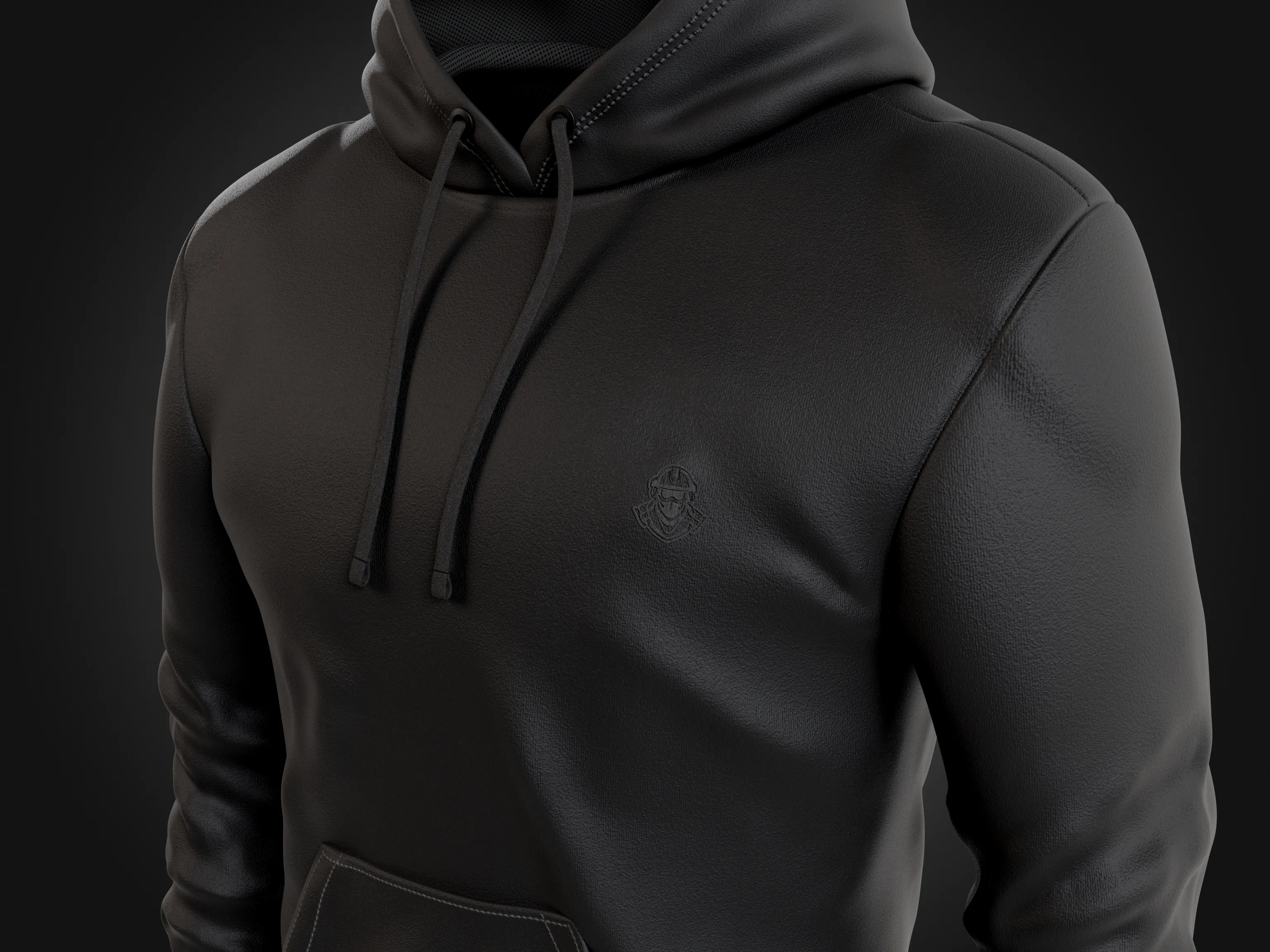
Close 3D render of the tonal chest mark, hood and drawcord detail
Tonal identity detail

From familiar silhouette to concealed system

Protection,
integrated.

The result is a connected design record in which the clean outer form, protective insert architecture, fit language and material definition all support the same product intent.